A Foreigners’ War, Their Own Memory:
Volunteers in the Spanish Civil War and Their Fates
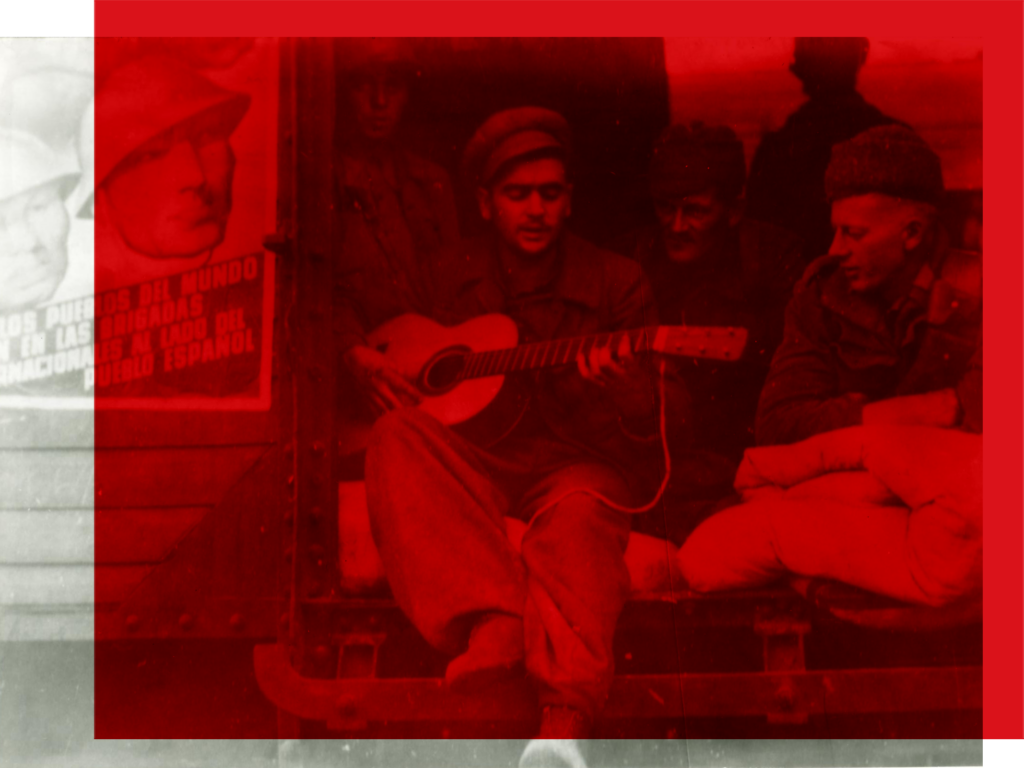
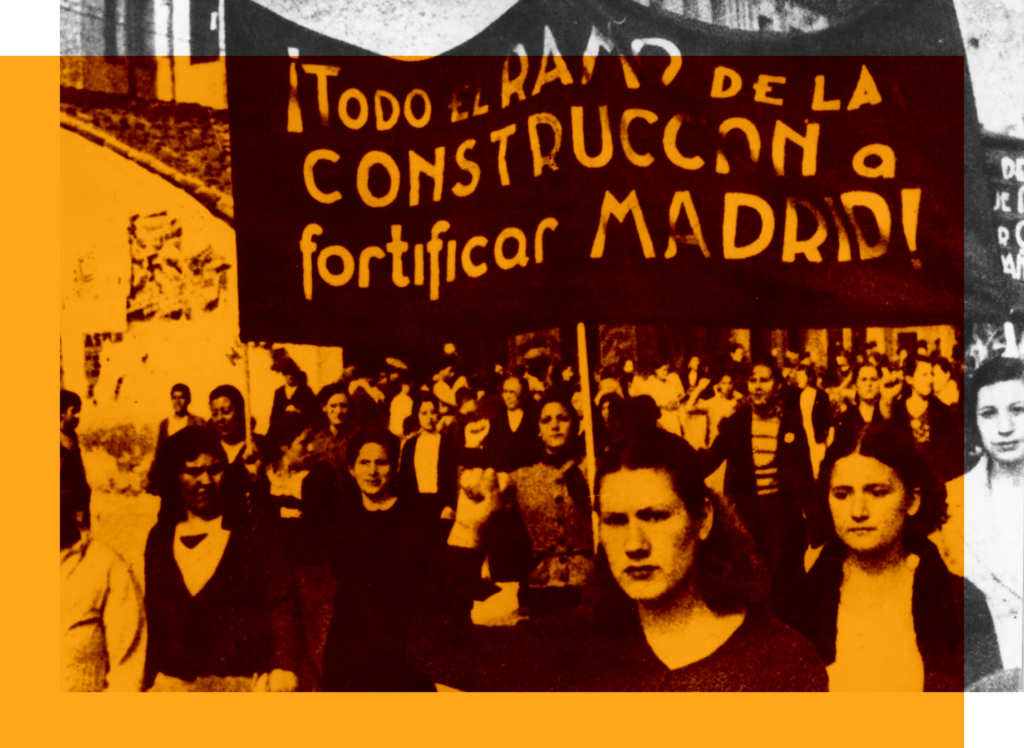
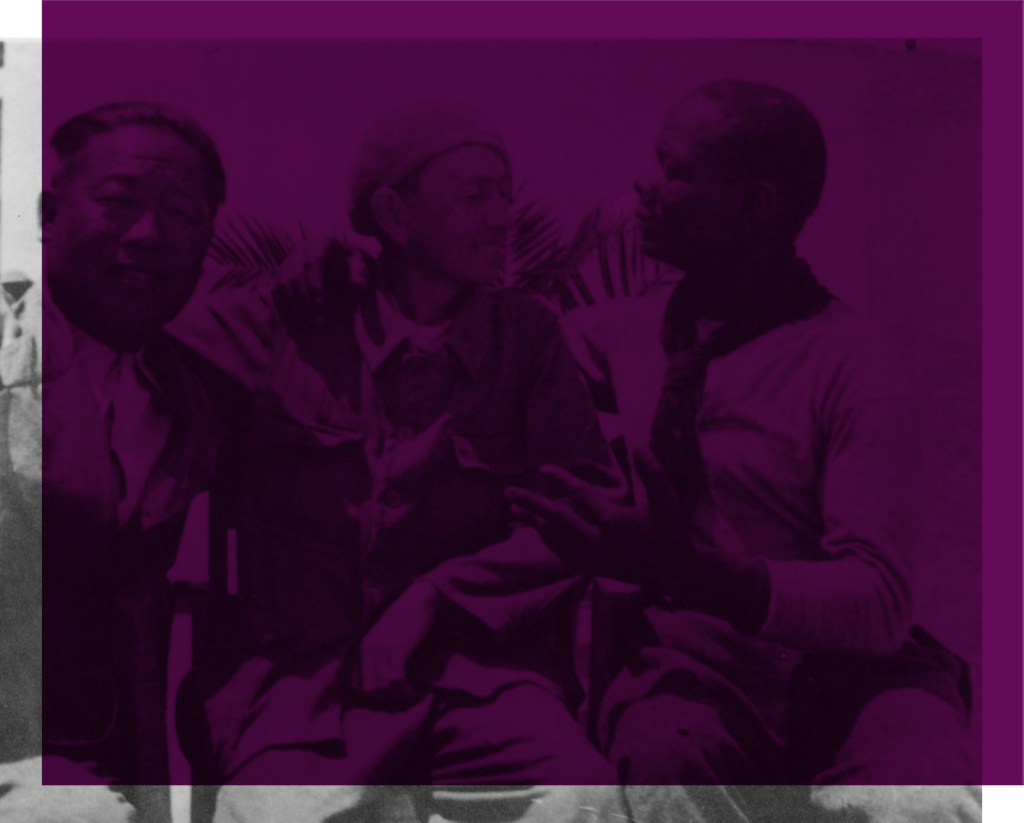
The Spanish Civil War was a crucial moment of international mobilization, ideological polarization, and transnational activism in the first half of the twentieth century. Volunteers who joined both sides of the conflict entered the watr with diverse motivations shaped by ideological, political, social, and personal factors. Their experiences represent unique insights into the cultural, political, and military history of the twentieth century. Yet the end of the civil war did not mark the end of their stories. Their fates continued not only into the following global conflict, but also into the decades that came after. Many of their life stories ultimately faded into partial obscurity—an obscurity that, in many countries, persists to this day.
The conference seeks to connect existing scholarship on the Spanish Civil War with broader questions of volunteerism, transnational networks, political mobilization, and historical memory. It will focus on volunteers’ motivations, their military- and everyday experiences, and their postwar trajectories. In addition, the conference will explore the ways in which these experiences have been commemorated, reinterpreted, and forgotten over the decades. Methodologically, it is open to the challenges of contemporary research, from digital humanities to oral history.
The conference aims to reopen debates on the Spanish Civil War as a key transnational conflict of the modern era. We welcome contributions focusing on interbrigadists and other Republican volunteers, as well as those who fought on the Francoist side.
The organizers intend to create an interdisciplinary forum and therefore welcome papers not only from historians but also from scholars in anthropology, cultural studies, gender studies, art history, political science, and museum studies.

Preliminary Areas
Volunteers on both sides of the Spanish Civil War
- Recruitment, motivations, and ideological frameworks
- Combat operations and everyday life
- Women volunteers, questions of masculinity, and other gender aspects
Postwar trajectories of volunteers
- Internment and other forms of persecution
- Second World War as a continuation
- Former volunteers within political and state structures
The Spanish Civil War and its international echoes
- Global context and the transnational dimension of the conflict
- Europe and Spain in the 1930s
- Fascism and anti-fascism
Memory, myths, and representations
- Politics of memory, remembrance, and forgetting
- Cultural reflections and reenactment
- Memorials, museums, and other sites of memory
Archival and methodological approaches
- New sources and research strategies
- Digital humanities and volunteer mapping
- Oral history research and working with eyewitnesses
Submission deadline: June 30, 2026
Conference languages: English, Czech and Slovak*
Conference date: November 25–26, 2026
Venue: Military History Institute (U Památníku 2, Prague)
Please send paper proposals, including an abstract of max. 200 words and short bio to ondrej.crhak@nm.cz
*Simultaneous interpretation between both languages will be provided on-site.
Conference Committee:
Military History Institute Prague
Mgr. Michal Cáp
Historical Research and Documentation Department
PhDr. Jiří Rajlich, Ph.D
Historical Research and Documentation Department
PhDr. Prokop Tomek, Ph.D.
Historical Research and Documentation Department
National Museum of the Czech Republic
Mgr. Ondřej Crhák, Ph.D.
Archive of the Náprstek museum
PhDr. David Majtenyi
Archive of the Museum of the Workers‘ Movement
Mgr. Jolana Tothová
Collection of the Museum of the Workers‘ Movement
Institute of Contemporary History, Czech Academy of Sciences
Mgr. Hana Bortlová Vondráková, Ph.D.
Research unit II. Humans, Identities, Environments
Mgr. Zdenko Maršálek, Ph.D.
Research unit II. Humans, Identities, Environments
Faculty of Arts, Charles University
PhDr. Radek Buben, Ph.D.
Centre for Ibero-American Studies
Mgr. Martin Jelínek
Institute of History
Faculty of Social Sciences, Charles University
PhDr. Barbora Menclová, Ph.D.
Institute of International Studies
Faculty of Arts, Palacký University Olomouc
doc. Lukáš Perutka, Ph.D.
Department of History